

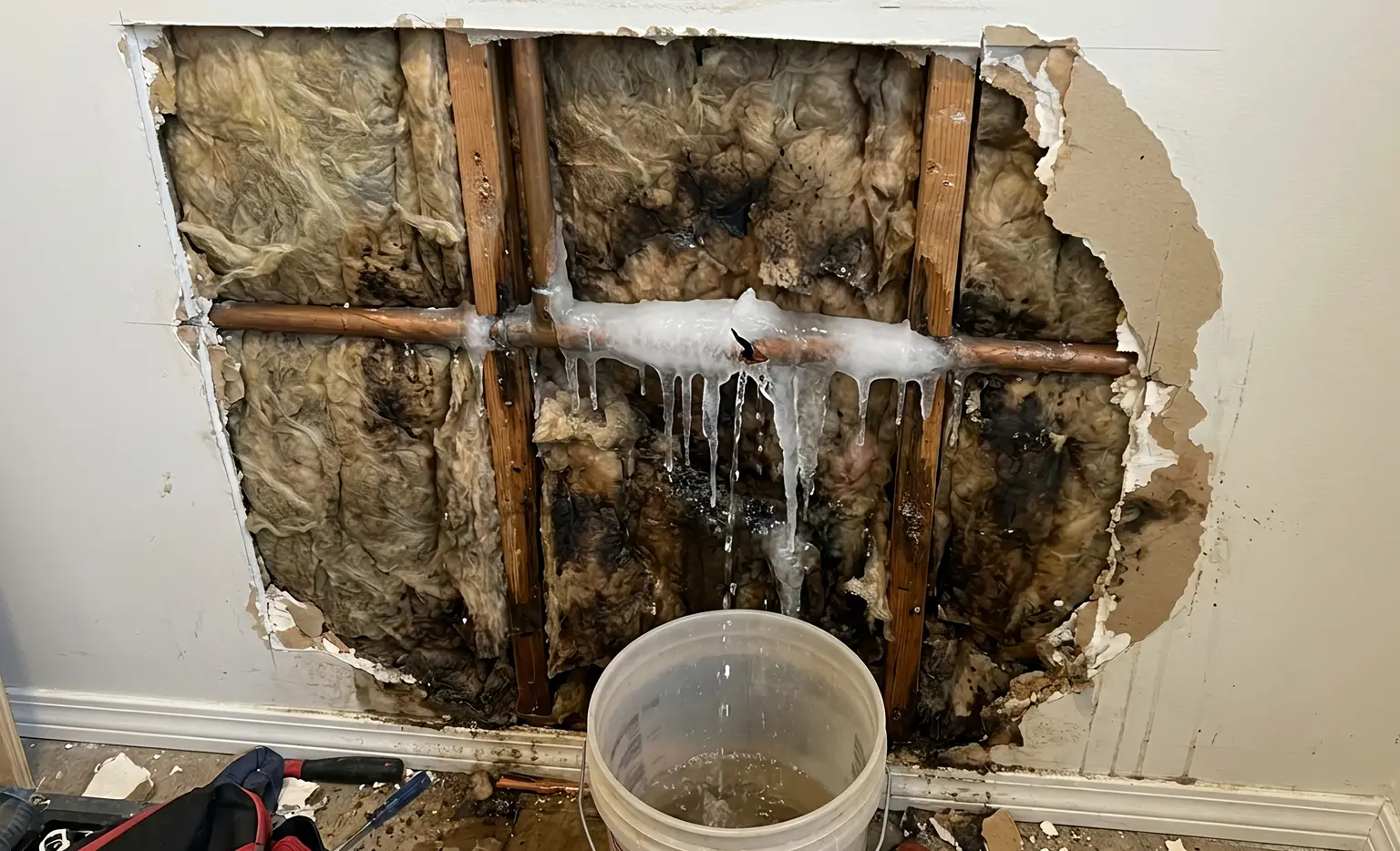
When temperatures drop suddenly, frozen pipes become one of the most common — and expensive — causes of property damage for homeowners. What often starts as a simple freeze can quickly turn into a burst pipe, flooding walls, ceilings, floors, and personal belongings in minutes.
The good news? Many frozen pipe losses are preventable with a little preparation and awareness.
Why Do Pipes Freeze — and Burst?
Water expands when it freezes. When temperatures drop below freezing, water inside pipes can turn to ice, increasing pressure inside the pipe. Eventually, the pipe can crack or burst — often after the ice begins to thaw and water flow resumes.
Some of the most common risk factors include:
- Pipes located in unheated areas such as basements, crawl spaces, garages, or attics
- Plumbing along exterior walls with limited insulation
- Sudden temperature drops following mild weather
- Vacant or lightly heated homes
- Gaps around windows, doors, or foundation penetrations that allow cold air inside
Importantly, pipes don’t always burst where they freeze. Pressure can cause failures several feet away, making leaks harder to detect until water damage is already spreading.
How to Prevent Frozen Pipes
A few proactive steps can significantly reduce your risk:
- Keep the Heat On — Even When You’re Away
If you’re leaving town, don’t turn the heat off. Keep the thermostat set to at least 55°F, even in unused areas of the home. - Insulate Vulnerable Pipes
Pipes in basements, crawl spaces, garages, and exterior walls should be wrapped with pipe insulation or heat tape. This is a low-cost, high-impact preventative step. - Seal Drafts and Air Leaks
Cold air sneaking in through gaps around windows, doors, and foundation openings can freeze nearby pipes. Caulking and weatherstripping help block those drafts. - Let Faucets Drip During Extreme Cold
A slow drip keeps water moving, reducing pressure buildup and lowering the chance of freezing — especially for pipes located on exterior walls. - Open Cabinet Doors
In kitchens and bathrooms, opening cabinet doors allows warm air to circulate around plumbing under sinks. - Know Where Your Main Water Shutoff Is
If a pipe does burst, shutting off the water quickly can dramatically limit damage. Every homeowner should know exactly where this valve is located.
FACTOID: Frozen Burst Pipes and Home Owner Insurance
Annually, more than 250,000 homes in the United States experience damage from frozen or burst pipes — and this water damage accounts for a significant portion of homeowner insurance claims each year.
What to Do If a Pipe Freezes (But Hasn’t Burst)
If you suspect a pipe is frozen:
- Keep the faucet open
- Apply gentle heat using a space heater, warm towels, or a hair dryer
- Start heating from the faucet end and work backward
Never use open flames. If you’re unsure or can’t safely access the pipe, it’s best to call a professional.
If the Worst Happens: Act Fast
When a pipe bursts, speed matters. Water damage spreads quickly, and the longer moisture sits, the greater the risk of:
- Structural damage
- Mold growth
- Secondary repairs and higher insurance costs
This is where experienced restoration professionals make the biggest difference.
All Claims Repairs is a true full-service water damage restoration company. We handle everything: rapid emergency response, water extraction and drying, detailed insurance documentation, and complete reconstruction. One call covers the entire process — no handoffs, no gaps, no juggling multiple contractors.
Our goal is to stabilize the situation fast and make the entire process easy — so homeowners can focus on getting back to normal while we handle the rest.